On the afternoon of 30 September, the Ministry of Industry and Trade, through the Multilateral Trade Policy Department, convened a meeting of the Expert Group to seek comments on the business questionnaire, survey methodology and calculation method for developing the 2024 Free Trade Agreement Implementation Index (FTA Index) for provinces and cities.
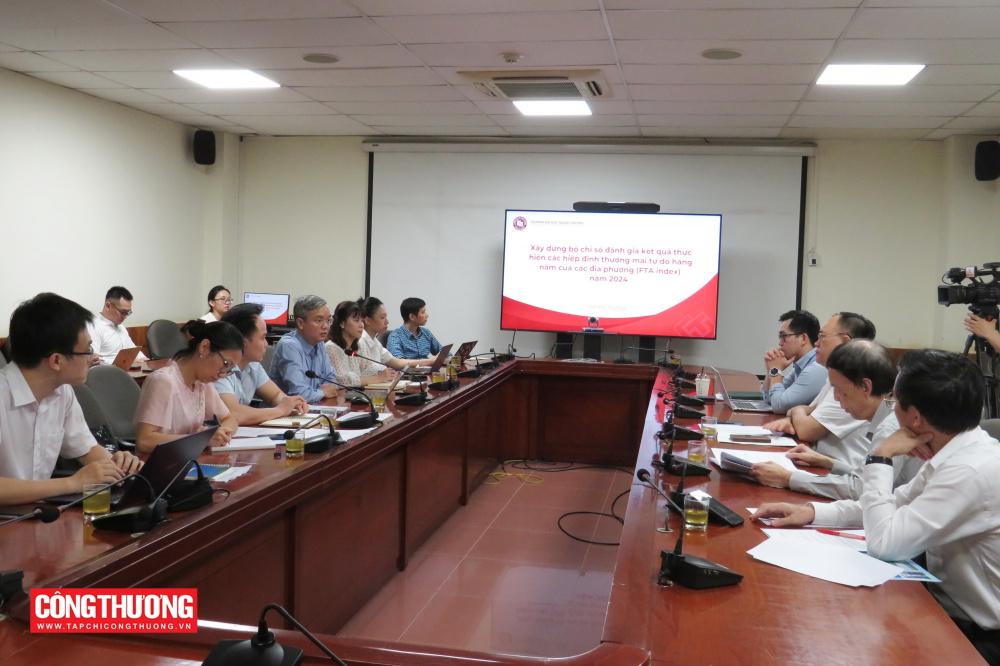
The Ministry of Industry and Trade convenes the Expert Group to review the business questionnaire, survey methodology and calculation method for the 2024 provincial FTA Index.
Surveying provincial businesses and calculating the FTA Index
Speaking at the meeting, Ngo Chung Khanh, Deputy Director General of the Multilateral Trade Policy Department at the Ministry of Industry and Trade, said that in Official Letter No. 1153/VPCP-QHQT of 15 February 2020, the Government requested the Ministry of Industry and Trade to lead and coordinate with ministries, agencies and provinces in developing an annual index assessing CPTPP implementation by ministries, agencies and provinces, with the aim of improving its effectiveness.
Following the Government’s direction and consultations with ministries, agencies and provinces, the Ministry of Industry and Trade submitted a proposal for an annual provincial Free Trade Agreement Implementation Index (FTA Index) to the Prime Minister in Official Letter No. 3660/BCT-DB of 28 June 2022.
In Official Letter No. 5678/VPCP-QHQT of 31 August 2022, the Government approved the FTA Index project and assigned the Ministry of Industry and Trade to lead and coordinate its implementation with relevant agencies.
On 11 January 2023, the Ministry of Industry and Trade issued Decision No. 48/QD-BCT establishing the FTA Index Task Force after consolidating comments from relevant ministries and agencies. During 2023, the Ministry worked with Task Force members to develop and approve the criteria and conditions for selecting the organisation responsible for implementing the FTA Index project.
In 2024, the Ministry of Industry and Trade coordinated with Task Force members and relevant organisations to select the project implementer on the basis of the criteria and conditions approved in 2023 and in accordance with applicable procedures.
Under Decision No. 1314/QD-VP of 20 September 2024, approving the contractor selection result for Package No. 01—“Surveying, consolidating and analysing data and developing the provincial Free Trade Agreement Implementation Index (FTA Index)”—Foreign Trade University was selected to undertake the assignment.
“One of the most important tasks for the successful development of the 2024 annual provincial FTA Index is to prepare the business questionnaire, survey methodology and calculation method,” Mr Khanh emphasised.

Ngo Chung Khanh, Deputy Director General of the Multilateral Trade Policy Department and representative of the FTA Index Task Force, presents the annual provincial FTA Index project.
A reliable information base for assessing FTA implementation effectiveness
At the meeting, Associate Professor Dr Dao Ngoc Tien, Vice President of Foreign Trade University, the organisation selected to survey, consolidate and analyse data and develop the provincial FTA Index, presented the proposed methodology for the assignment.
The survey, data consolidation and analysis, and development of the provincial FTA Index are intended to achieve the following objectives:
The FTA Index reflects the effectiveness of FTAs at the provincial level, with particular attention to the direct beneficiaries—businesses and consumers;
The FTA Index provides reliable supplementary information to guide investment decisions, thereby encouraging high-quality investment that capitalises on FTA opportunities;
The FTA Index provides an important information base for strengthening direction and oversight of FTA implementation in provinces and cities;
The FTA Index strengthens the effectiveness and efficiency of state management and the role of central agencies in helping provinces and businesses capture opportunities and mitigate the risks and challenges arising from FTAs;
The FTA Index assesses provincial implementation results against the Government’s action programmes and the provinces’ own FTA implementation programmes, thereby identifying strengths and limitations. It also provides an important basis for provincial policy and strategy development;
The FTA Index encourages government agencies, provinces, citizens and businesses to pay greater attention to FTA utilisation and international economic integration.
Under the proposed methodology, the survey sample was expected to cover 4,000 enterprises engaged in the export or import of goods across 63 provinces and cities. Participating enterprises would meet sampling criteria relating to business type, principal line of business and years of operation in economic sectors directly associated with FTA utilisation under the Viet Nam Standard Industrial Classification 2018 (VSIC 2018).
In addition to general business information, the survey would focus on enterprises’ assessments of the four groups of tasks in the Government’s action plans for implementing new-generation FTAs (the CPTPP, EVFTA and UKVFTA), including:
Communication and information dissemination: businesses’ awareness of FTAs; provincial FTA communication activities; and market information and requirements provided by local authorities;
Development and implementation of legislation: businesses’ awareness of legal instruments implementing FTAs; support and guidance from local state management agencies in understanding relevant legislation; and the quality of responses to business enquiries;
FTA utilisation, competitiveness and human-resource development: businesses’ use of FTAs; local government support programmes for technological innovation and the application of science and technology in production and business; support for stronger governance and human resources; and connections between domestic enterprises and foreign-invested enterprises;
Implementation of sustainable development commitments relating to labour and the environment: businesses’ awareness of and ability to comply with sustainable development commitments, and support from local state management agencies for such compliance.
The survey and data collection were expected to take place in October and November 2024.
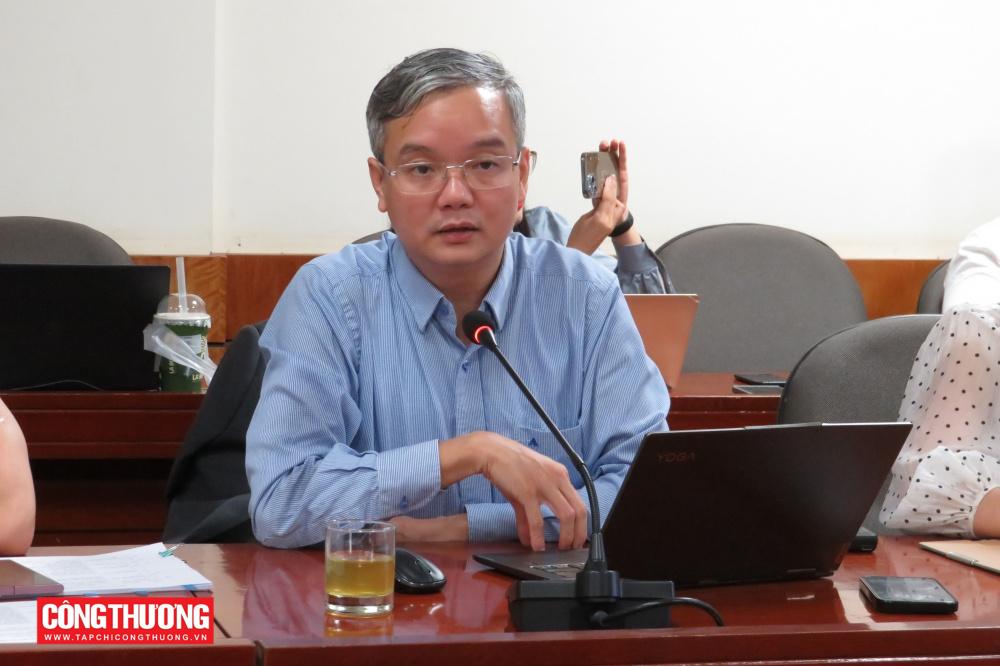
Associate Professor Dr Dao Ngoc Tien, Vice President of Foreign Trade University, presents the proposed survey, data consolidation and analysis, and FTA Index methodology.
Compatibility with existing indices should be considered
The experts welcomed the Ministry of Industry and Trade’s implementation plan for the FTA Index project and Foreign Trade University’s proposed survey and analytical methodology. They focused their discussion and recommendations on several areas for further refinement.
Dr Luong Van Khoi, Deputy Director of the Central Institute for Economic Management under the Ministry of Planning and Investment, recommended classifying surveyed enterprises by type, size, sector and location to assess their circumstances and level of FTA utilisation more precisely. He also suggested placing greater emphasis on links between Vietnamese businesses and enterprises in FTA partner markets.
Dr Khoi also commented on the sampling method, FTA Index calculation and data sources. He recommended developing an online FTA Index survey and ranking system to make participation more convenient for businesses.
Dr Vo Tri Thanh, Director of the Institute for Brand and Competitiveness Strategy, said that developing an index such as the FTA Index should take into account both its necessity and its compatibility with existing indices. The survey’s objectives and expected outputs should be clearly defined, and the research should include specific FTA utilisation case studies.
Dr Thanh also recommended adding specific indicators on green and digital transformation, as well as questions on risk sharing, responses to integration and trade risks, and business feedback on FTA support policies.
Associate Professor Dr Bui Van Huyen, Director of the Institute of Economics at the Ho Chi Minh National Academy of Politics, agreed with the other experts and added comments on survey participants, enterprise sampling and questionnaire content.
A representative of the Tony Blair Institute for Global Change recommended collecting the tax identification numbers of surveyed businesses so that FTA utilisation could be consolidated and classified by sector and field of activity.
“Before conducting the full survey, a pilot survey of selected representative businesses should be considered. The pilot results would provide a sound basis for a more relevant and effective full survey,” the representative proposed.
The team responsible for the survey, data consolidation and analysis, and FTA Index methodology said it would incorporate all expert comments and review and revise the questionnaire, survey methodology and calculation method in line with the project’s objectives.
The FTA Index Task Force and the implementing team will continue to consult experts, ministries, agencies and relevant stakeholders to finalise the survey methodology and develop the FTA Index in accordance with the assigned plan and responsibilities. |
Source: Ministry of Industry and Trade Magazine