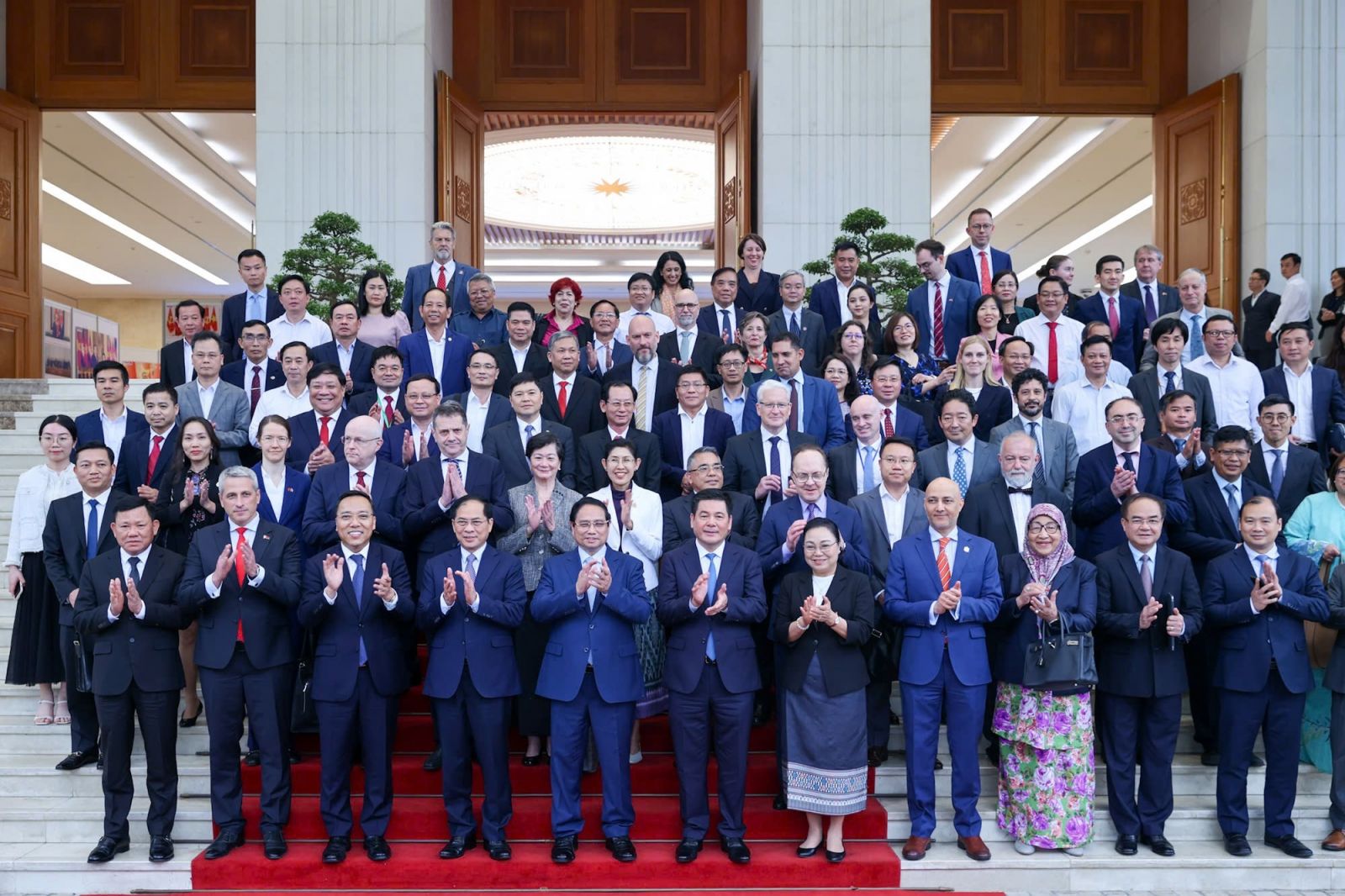
The launch of the FTA Index not only marks an important step forward in Viet Nam’s international economic integration but also lays a solid foundation for improving the effective implementation of free trade agreements (FTAs). It will also provide better support for businesses and provincial authorities participating in international trade and regional and global value chains.

Leveraging FTAs — “major highways” for trade growth
In his opening remarks, Minister of Industry and Trade Nguyen Hong Dien emphasized that the FTA Index would serve as a quantitative, objective and comprehensive tool for assessing the status and level of FTA implementation across all 63 provinces and cities nationwide.
Minister Nguyen Hong Dien noted that the world is changing every day. The clearest sign is the increasingly intense strategic competition and trade disputes among major powers, particularly the widening trend of trade protectionism. The United States President had also just announced reciprocal tariffs ranging from 10% to 49% on goods imported from all countries, creating uncertainty for the international trading order and the global economy.
Against that backdrop, free trade agreements are regarded as “major highways” that provide exceptional conditions for promoting trade among countries and as “open doors” connecting Viet Nam’s economy with the world.
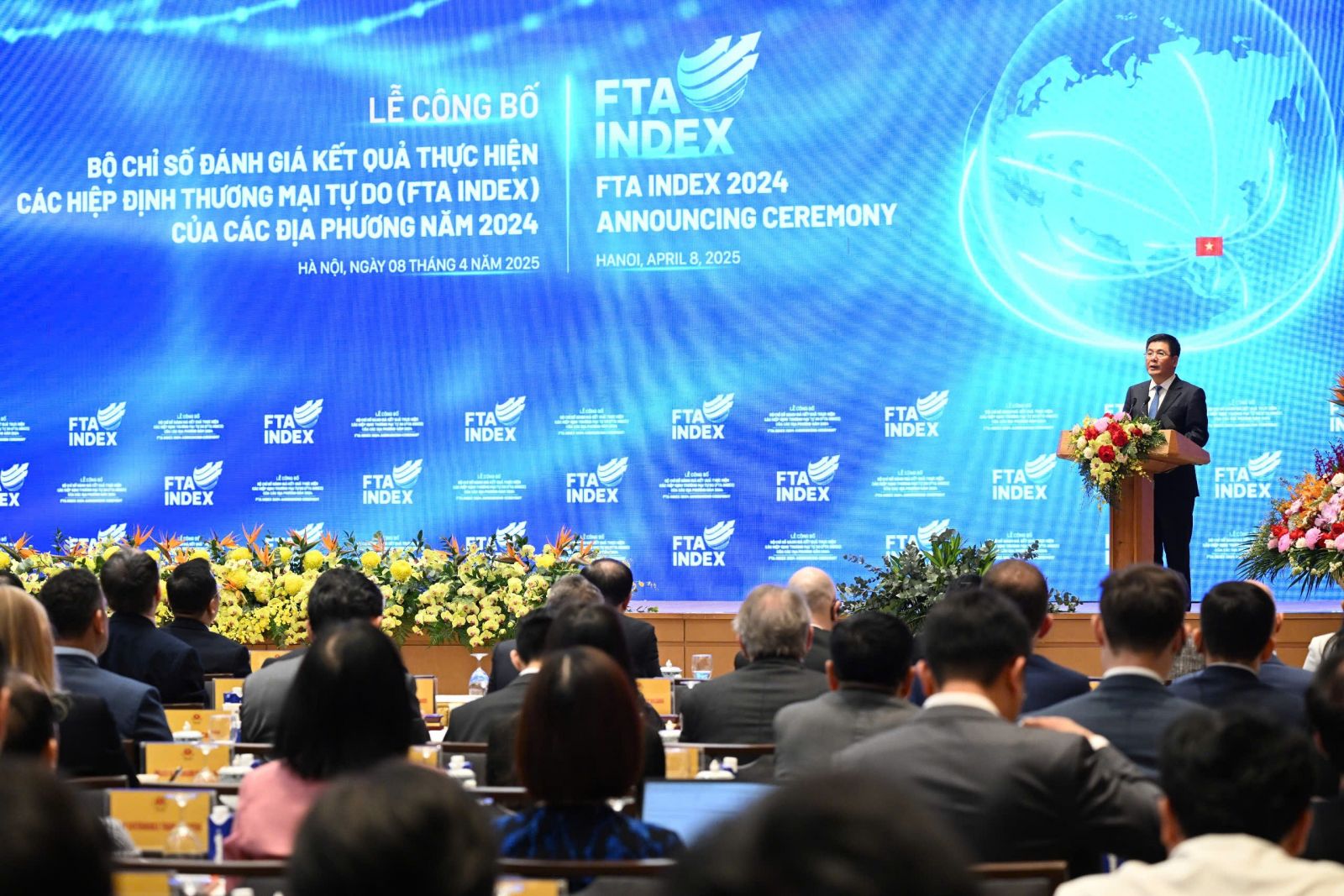
Minister of Industry and Trade Nguyen Hong Dien delivers the opening remarks at the ceremony
In recent years, free trade agreements have enabled Vietnamese goods to become more deeply integrated into global production and supply chains. They have also contributed to growth in import and export turnover and helped improve the trade balance, shifting it from deficit to sustained surplus over many consecutive years.
However, despite these achievements, FTA implementation has continued to face several shortcomings and constraints. The ability to take advantage of FTA opportunities remains uneven among provinces, cities and businesses, particularly small and medium-sized enterprises. Many businesses have not paid sufficient attention to updated information, do not fully understand specific commitments and lack the capacity to meet standards on origin, technical requirements, the environment and labour.
To address these limitations promptly, the Government assigned the Ministry of Industry and Trade to research, develop and publish the FTA Index annually. The Index is intended to establish a transparent, objective and comprehensive database on the implementation of FTA commitments in each province and city. It provides an important basis for the Government, ministries, sectors and provincial authorities to formulate practical and feasible mechanisms and policies for production, imports and exports, while encouraging the business community to participate proactively and use FTAs effectively to expand production, trade, imports and exports.
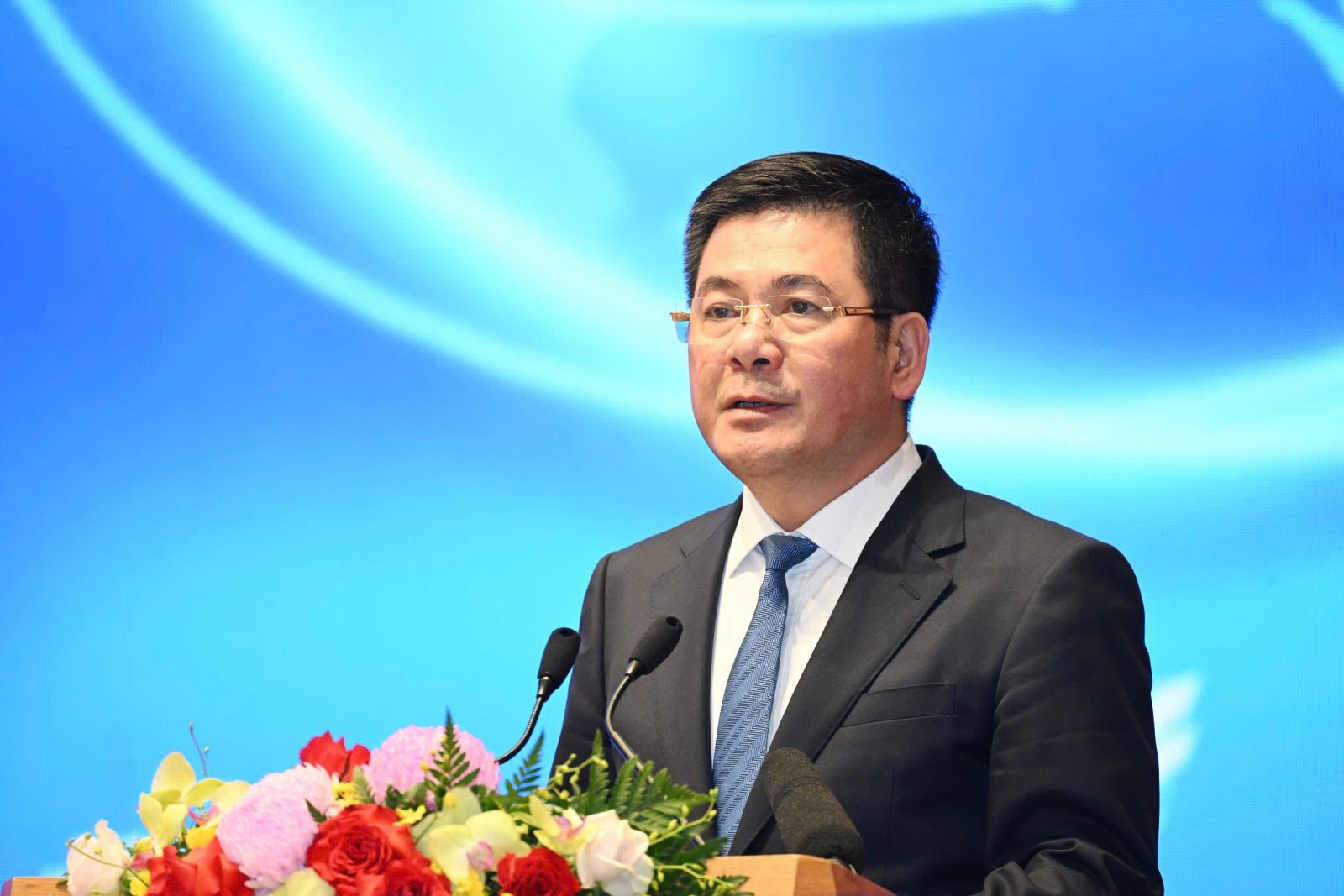
Minister Nguyen Hong Dien stressed that the FTA Index provides clear evidence of Viet Nam’s commitment to trade liberalisation, fair competition and sustainable development. As a quantitative, objective and comprehensive assessment tool, it will help the Government and relevant authorities measure how effectively provinces and cities implement and utilise FTAs, identify bottlenecks in carrying out commitments and propose specific improvements to support practical and effective policy direction and administration for production, imports and exports at every level of government.
Assessing and publishing FTA implementation results through the Index is not merely about measurement or comparison on a common basis. It also creates an incentive for provinces and cities to innovate continuously, accelerate administrative reform, help businesses implement commitments effectively and optimise the resources and opportunities offered by FTAs. This will support market, supply-chain and export-product diversification, sustain growth, improve the effectiveness of international integration and contribute positively to the country’s socio-economic development.
The FTA Index reflects the effectiveness of business support policies
Speaking at the FTA Index announcement ceremony, Prime Minister Pham Minh Chinh emphasized that this was a new, quantitative and systematic tool, developed and published for the first time on the basis of an actual survey of businesses in all 63 provinces and cities nationwide.
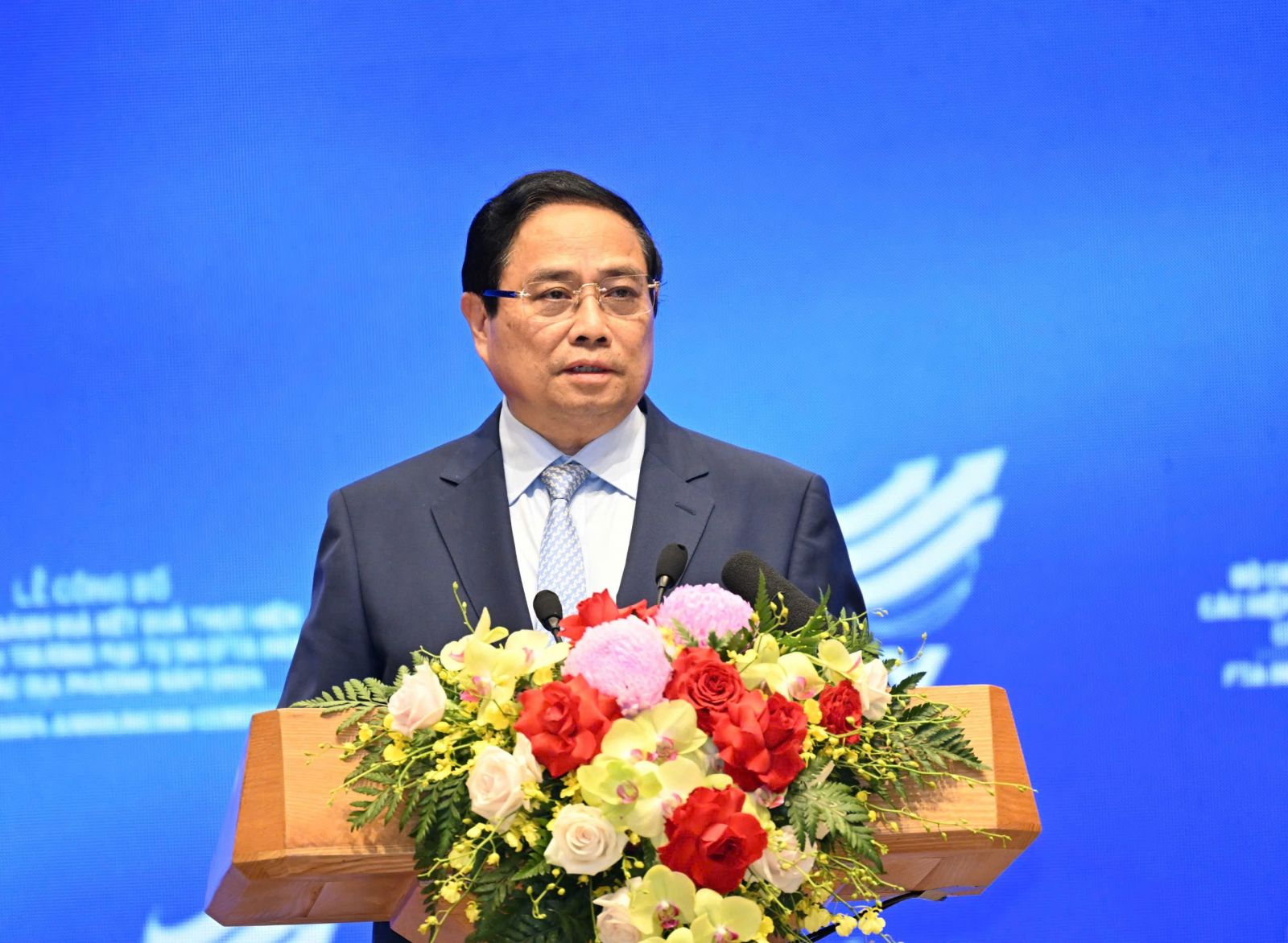
Prime Minister Pham Minh Chinh delivers his policy address at the ceremony
The Index is designed to provide transparent and objective data for the Government, central agencies and provincial authorities to direct, monitor and administer international integration. It also provides a basis for formulating policies and development strategies suited to the conditions and potential of each province and city.
The Prime Minister observed that the world is undergoing immense and difficult changes, but that the main current remains peace, cooperation, development and integration. Integration, however, is not simply a red carpet strewn with roses; it brings many obstacles and difficulties that require Viet Nam to make an effort, move forward together, catch up and ultimately advance beyond. While integrating, the country must maintain independence and self-reliance, without depending excessively on any partner.
“We welcome all partners who come to Viet Nam in good faith, but we do not accept integration at any cost or integration that creates dependence. Integration must be built through our own hands and minds, our skies and seaports, and through the core values of the Vietnamese people and Viet Nam’s traditional culture, history and thousand-year civilisation,” the Prime Minister stated.
The Prime Minister also said that Viet Nam must advance through its own capabilities and internal strengths. Integration is needed to support exports as a driver of growth, but exports cannot be the only driver; other sources of growth are also required.
The 17 FTAs signed with more than 60 partners are important, but Viet Nam must not become entirely dependent on them. The country should continue expanding FTA negotiations into other regions with substantial untapped potential. Viet Nam must remain confident and proud and continue striving forward without complacency, pessimism or fear. The difficulties faced today are modest compared with the challenges the country and its people have overcome throughout history, particularly during the 50 years since national reunification.
Viet Nam has now signed and implemented 17 FTAs with more than 60 partners. This demonstrates the country’s role and standing, as well as the cooperation and trust that international partners place in Viet Nam, while creating opportunities for the country to deepen integration and continue advancing.
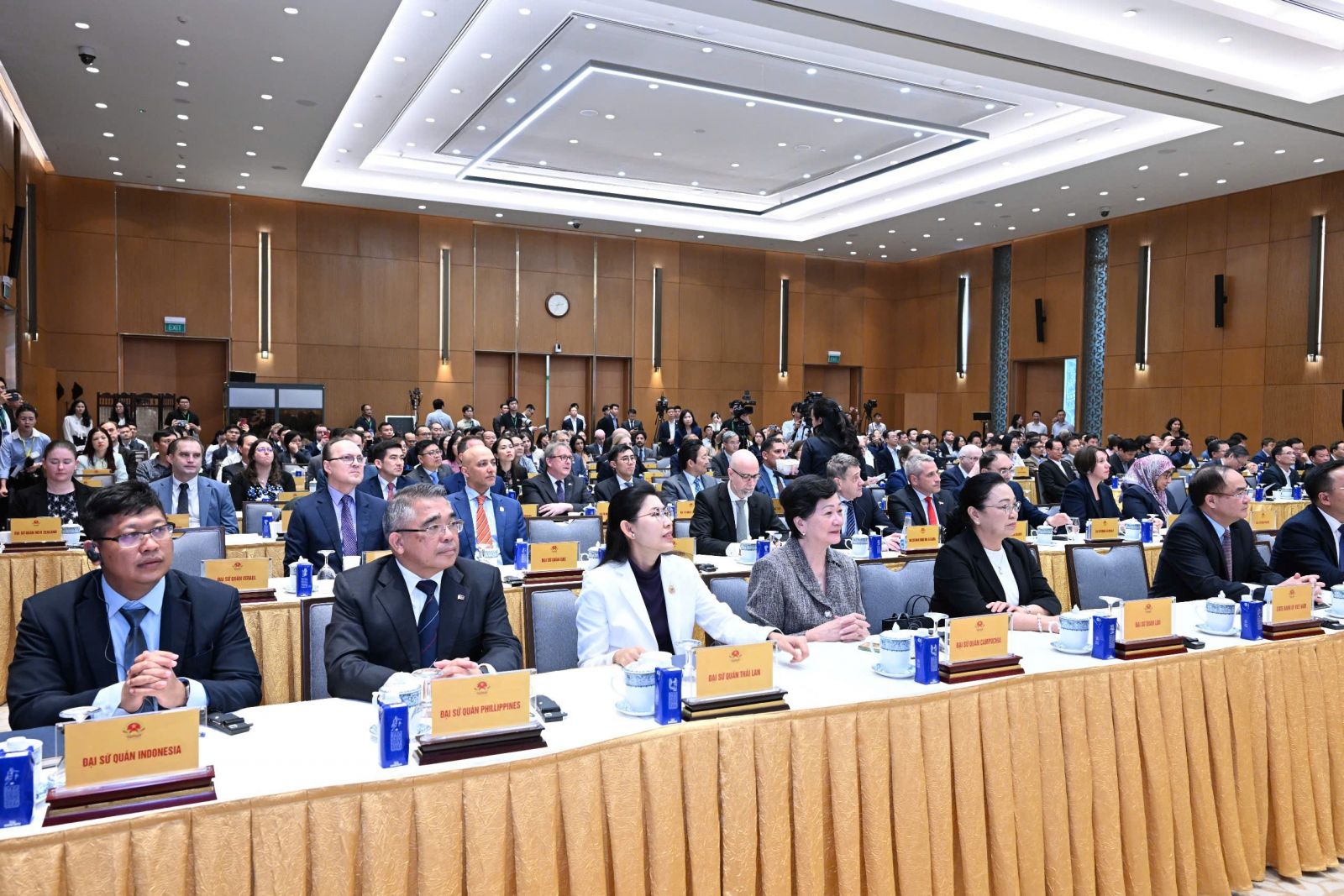
The Prime Minister emphasized Viet Nam’s vision of becoming a developed, high-income country by 2045. Accordingly, the country set a target of at least 8% growth in 2025 to create momentum, capacity and confidence for double-digit growth in subsequent years. This requires renewing traditional growth drivers and promoting new ones. Viet Nam therefore greatly values the support of international partners, particularly in developing high-quality human resources.
The Prime Minister further noted that international economic integration and participation in FTAs have made important contributions to Viet Nam’s socio-economic development goals and strengthened the country’s connections with nations around the world. In this context, the Government assigned ministries, sectors and provincial authorities to develop and publish the FTA Index.
“This is a strategic step with practical and timely significance,” the Prime Minister said. He added that the FTA Index is an important tool for measuring how provinces and cities implement and utilise FTAs, thereby providing a basis for the National Assembly, the Government, ministries and sectors to assess comprehensively the strengths and weaknesses of FTA implementation.
The FTA Index also reflects the effectiveness of business support policies and coordination between central and provincial authorities. It enables public agencies to introduce appropriate policies to optimise FTAs, particularly as the agreements become broader in scope and have a deeper impact on trading partners.
The FTA Index evaluates how effectively international commitments are implemented in provinces and cities and helps strengthen growth drivers, especially provincial export growth. Strong FTA Index performance indicates that FTA implementation is making a positive and effective contribution to the province or city concerned.
On this occasion, the Prime Minister commended the efforts of the Ministry of Industry and Trade, other ministries, sectors, provincial authorities and relevant agencies in developing and announcing the 2024 FTA Index—the first publication of this important Index. He thanked countries, partners and international friends for supporting Viet Nam in its development and called on provinces and cities to compete constructively and perform better, fulfil their commitments, strengthen their reputation and improve the business environment.
As Viet Nam enters a new era of national prosperity, the Prime Minister called for international solidarity, multilateralism and deeper, substantive and effective cooperation. He affirmed that the Government would continue promoting measures to maximise the benefits of signed FTAs, improve the quality of international commitment implementation, expand markets and pursue new FTAs with potential partners such as Brazil, India and the Middle East in order to diversify markets, products and supply chains.
The Prime Minister instructed ministries, sectors and provincial authorities to strengthen self-reliance, advance decentralisation and delegation of authority, and reduce administrative costs, processing time and the number of procedures by 30% during the year, thereby creating a more open business environment and a more attractive investment climate.
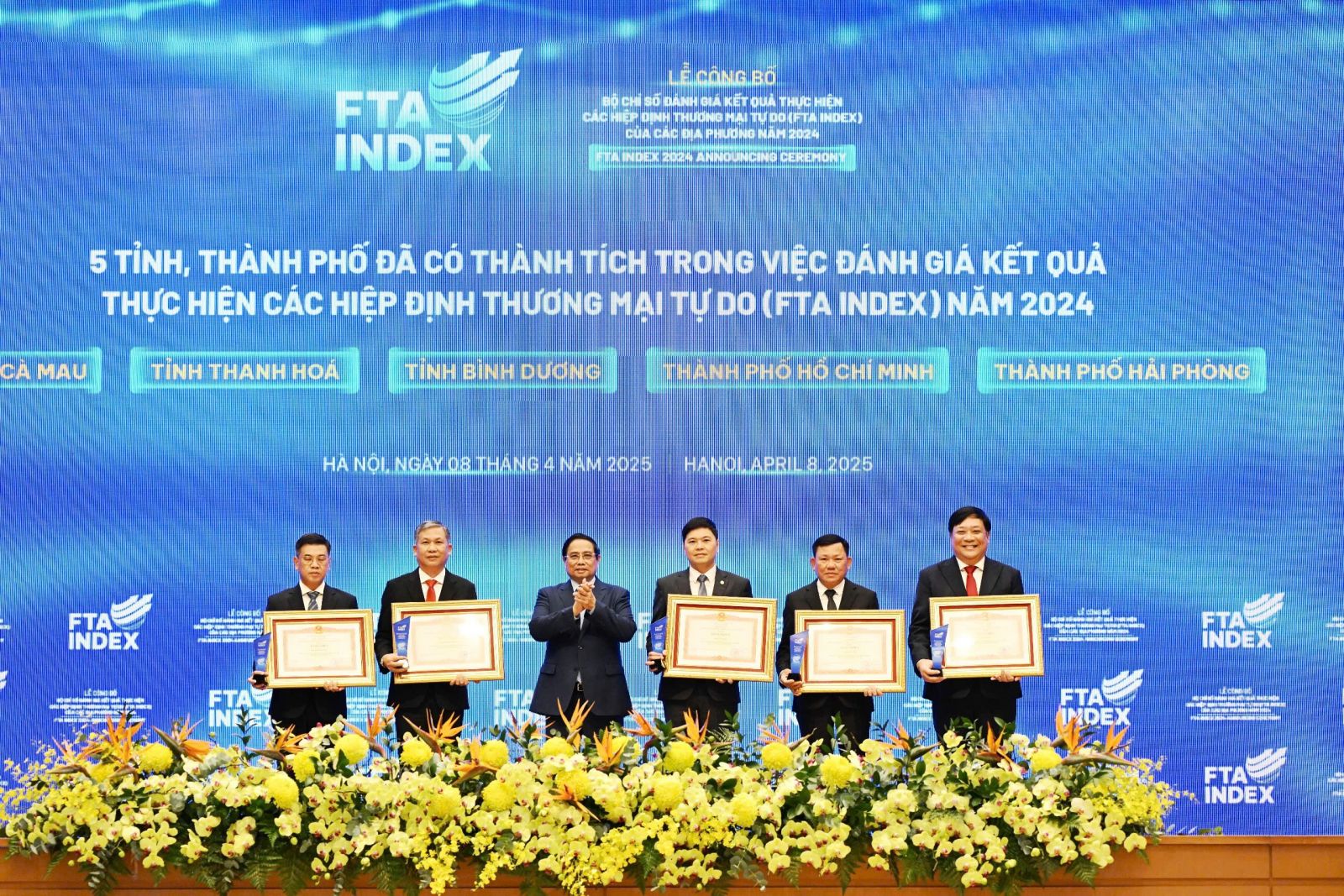
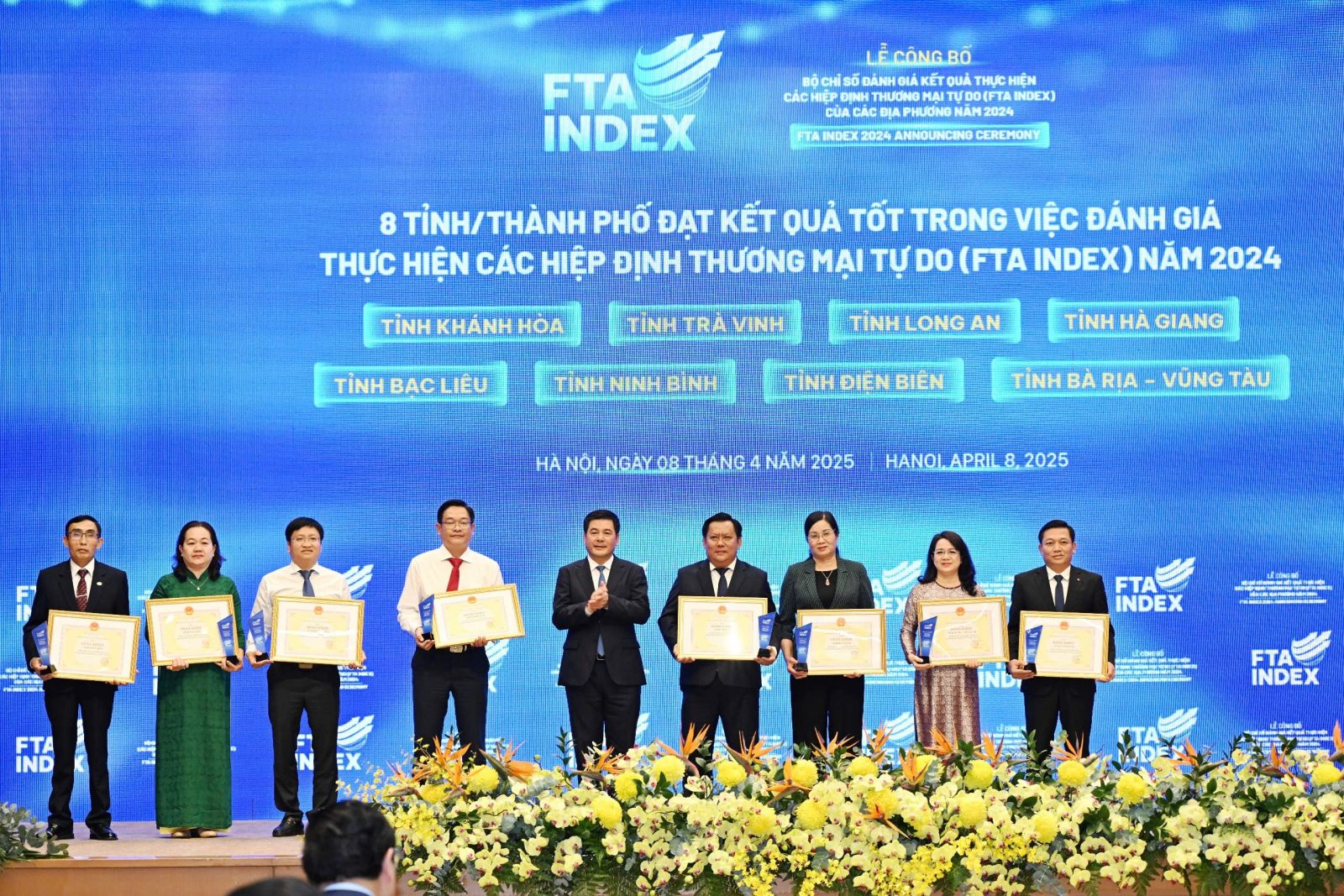
Provinces and cities receive Certificates of Merit for their achievements in the 2024 FTA Index assessment
Regarding businesses, the Prime Minister said the Government was providing support through tax policies, including tax extensions and deferrals; preparing legislative amendments to reduce taxes, fees and charges for submission to the National Assembly; reducing land rent; and lowering compliance costs. These measures also contribute to improving FTA Index performance.
The Prime Minister expressed confidence that, alongside the efforts of the Government, ministries and sectors, Viet Nam would continue to receive support from international partners with extensive experience in this field as the country pursues substantive and effective international integration, including through measurement tools such as the FTA Index.
Detailed information on provinces and cities recognised for achievements in the 2024 FTA Index assessment 1. Certificates of Merit from the Prime Minister for provinces and cities with achievements in the 2024 FTA Index assessment. The Prime Minister awarded Certificates of Merit to provinces and cities for their achievements in the 2024 FTA Index assessment. They were Ca Mau, Thanh Hoa and Binh Duong provinces, and Ho Chi Minh and Hai Phong. 2. Certificates of Merit from the Minister of Industry and Trade for provinces and cities rated “Good” in the 2024 FTA Index assessment. The Minister of Industry and Trade awarded Certificates of Merit to provinces and cities rated “Good” in the 2024 FTA Index assessment. They were Khanh Hoa, Tra Vinh, Long An, Ha Giang, Bac Lieu, Ninh Binh, Dien Bien and Ba Ria–Vung Tau provinces. 3. Certificates of Merit from the Minister of Industry and Trade for provinces and cities rated “Fair” in the 2024 FTA Index assessment. The Minister of Industry and Trade awarded Certificates of Merit to provinces and cities rated “Fair” in the 2024 FTA Index assessment. They were Kien Giang, Quang Ninh, Quang Binh, Dong Nai, Tien Giang, Thai Nguyen, Phu Yen, Binh Dinh, Binh Thuan, Lam Dong, Ben Tre, Dak Lak and Quang Nam provinces, and Can Tho. 4. Certificates of Merit from the Minister of Industry and Trade for provinces and cities achieving the highest results in the 2024 FTA Index component indicators. The Minister of Industry and Trade awarded Certificates of Merit to the provinces and cities achieving the highest results in the 2024 FTA Index component indicators. They were: – Ninh Binh: highest result for FTA communication and information dissemination. – Khanh Hoa: highest result for implementing legal regulations related to FTA implementation. – Thanh Hoa: highest result for implementing support policies that improve business competitiveness. – Bac Lieu: highest result for implementing sustainable development commitments. |